Understanding Biodiversity Net-Gain Credits in Canada
Once, ecological loss was simply the arithmetic of progress — wetlands drained, forests cleared, grasslands turned over, with no ledger entry anywhere to record what disappeared. That era is giving way to something more rigorous. Biodiversity net-gain credits are the instrument through which measurable ecological improvement is documented, verified, and formally recognised. They are not financial products conjured from abstraction. Each credit traces back to a real landscape, a qualified ecologist's field assessment, a peer-reviewed habitat condition score, and a legally binding permanence commitment. This page gathers Orgulcoernuilyar's analytical thinking about how credits are generated, what verification frameworks govern their integrity, and how the Canadian regulatory environment shapes both supply and demand across a three-to-five year strategic horizon. Past performance of analogous environmental instruments does not guarantee future results. Results may vary depending on regulatory, ecological, and market conditions.

Orgulcoernuilyar Research Team
Environmental Asset Analysis, Canada
Credit Genesis
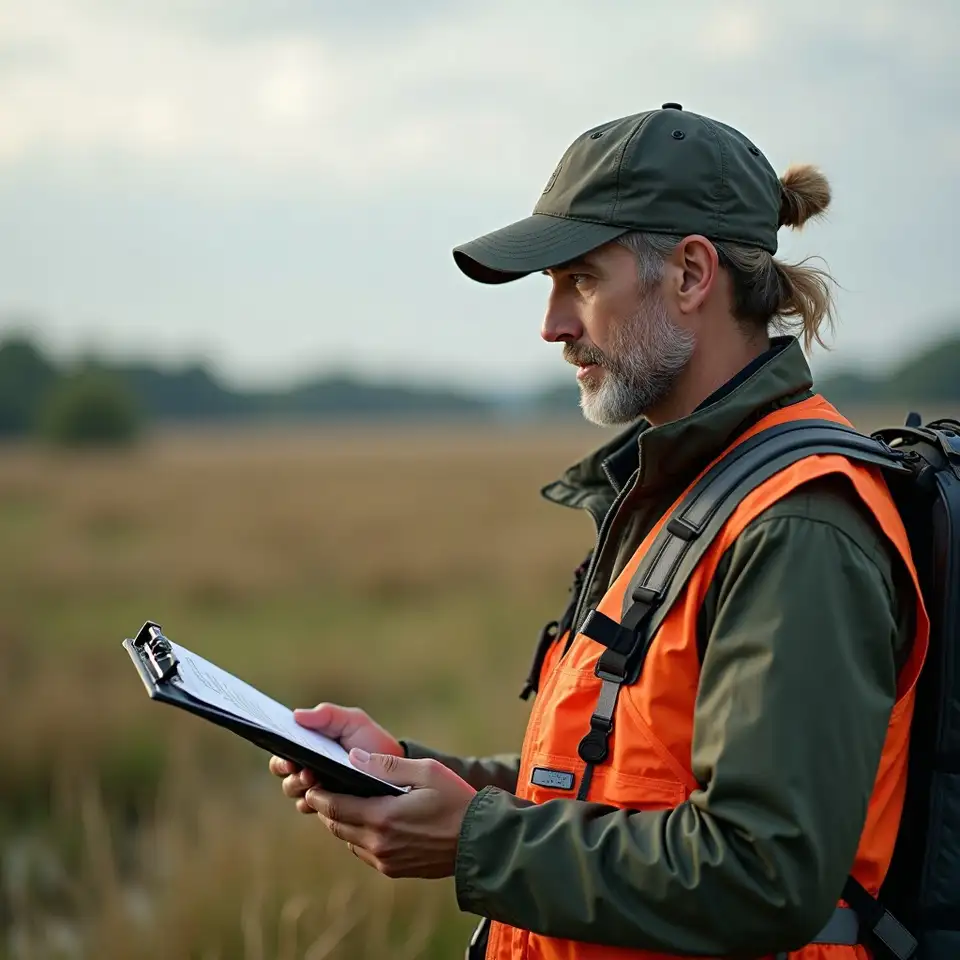
How a landscape becomes a verified biodiversity offset credit unit
The journey from degraded land to recognised credit is longer and more technical than it
first appears. A qualified ecologist visits the site and scores its current condition
against a peer-reviewed baseline, measuring species richness, structural complexity —
the layering of vegetation from ground cover to canopy — and ecological connectivity to
adjacent habitats. The delta between the site's degraded state and its restored or
protected potential, expressed in standardised units, is the raw material of the credit.
An independent third-party auditor then reviews the field data against satellite
imagery, historical land-use records, and published benchmarks. Only once that audit is
complete is the credit formally entered onto a publicly accessible registry, with a full
issuance, transfer, and retirement record. A legal covenant or conservation easement
then binds the land to its ecological commitment for the agreed duration. The credit is,
in the most precise sense, a documented ecological change — not a promise, but a
verified and registered outcome tied to a specific place.
Contact Us
The Canadian Context
2026
The year Canada's Nature Accountability Act framework continues to take shape across
federal and provincial levels
Canada's biodiversity offset frameworks are younger than those in Australia or the United Kingdom, but the regulatory momentum behind them is building with notable consistency across federal and provincial levels, and the supply of high-integrity credits is beginning to respond.
Regulatory Momentum

The Species at Risk Act has long created habitat protection obligations for development projects in Canada. The formalisation of tradeable offset credits — with standardised habitat scoring, independent verification, and registry infrastructure — is a more recent and rapidly evolving development. Provinces including British Columbia and Ontario are building their own offset frameworks, each with distinct habitat classification systems and verification requirements. The result is a regulatory patchwork that rewards those who invest the time to understand it at the ecological zone level, not just the national level. Orgulcoernuilyar's analytical work maps these supply and demand dynamics across Canadian regions, identifying where regulatory pressure is strongest, where high-condition habitats remain available for protection or restoration, and what verification timelines participants should realistically anticipate before a credit reaches formal recognition. This is the analytical grounding that a three-to-five year strategic horizon makes possible.
Five Questions Analytically Minded Participants Ask About Biodiversity Credits in Canada
The biodiversity net-gain credit market raises genuinely difficult questions about ecological measurement, legal durability, and regulatory demand — and honest answers require more than surface-level familiarity with the asset category.
Orgulcoernuilyar's analytical work is organised around the questions that matter most to participants engaging with biodiversity credits across a multi-year strategic horizon.
The first question is always about additionality: would the ecological improvement have happened anyway, without the offset mechanism? This counterfactual test is the most contested element of any credit's integrity review. A credit that simply documents what nature was already doing on its own provides no genuine ecological benefit and carries significant regulatory and reputational risk for anyone relying on it.
The second question concerns permanence: how long is the conservation commitment legally
binding, and what happens if the landowner's circumstances change? Credits backed by
short-duration agreements carry reversal risk. High-integrity credits are supported by
legal instruments — registered covenants, conservation easements, or government-backed
protections — that bind the land for periods aligned with the ecological recovery
timeline of the habitat type.
The third question addresses measurability: how granular is the habitat condition scoring, and how many independent eyes have reviewed the field data? The difference between a robust credit and a fragile one often comes down to how many species, structural layers, and connectivity attributes were actually measured in the field, and whether the audit trail is publicly accessible and tamper-resistant.
The fourth question is about leakage: does protecting one site simply displace harmful
activity to an adjacent area, negating part of the ecological gain? Robust credit
methodologies include quantitative leakage buffers — discounts applied to the total
credit that account for the statistical probability of displaced impact within the
broader landscape. Without them, the net benefit is smaller than the headline figure
suggests.
The fifth question is about regulatory demand: which projects in which jurisdictions are
legally required to offset their ecological impacts, and does that requirement generate
enough structured demand to support a functioning credit market? Understanding the
regulatory architecture is inseparable from understanding the credit market it sustains,
and Orgulcoernuilyar tracks these developments closely across Canadian federal and provincial
frameworks.
The first layer is the field assessment itself. A qualified ecologist visits the site and applies a standardised scoring framework — such as those aligned with Environment and Climate Change Canada's biodiversity metrics — to measure species richness, structural vegetation complexity, and connectivity to adjacent habitat. The score is not a desktop estimate. It requires physical presence, direct observation, and professional judgement calibrated against peer-reviewed benchmarks.
The second layer is independent audit. A third-party auditor — separate from the ecologist who conducted the field assessment — reviews the raw data against satellite imagery, historical land-use records, and published scientific literature. This layered scrutiny is what separates a credible credit from an unverified assertion. The audit trail is not a procedural formality appended to the credit. It is, in the most precise analytical sense, the foundation of the credit's value.
The third layer is registry transparency. Once verified, the credit is entered onto a publicly accessible, tamper-resistant platform that records every issuance, transfer, and retirement event. A credit that cannot be traced through a transparent registry carries provenance risk that no amount of ecological field work can offset. Orgulcoernuilyar treats registry transparency as a minimum standard of analytical credibility, not an optional enhancement to the verification process.
Three Habitat Types Generating the Most Analytical Interest in the Canadian Offset Market
Not all habitat types generate credits with equal integrity, equal demand, or equal
verification complexity. Canada's diverse ecological geography creates a varied
landscape of credit opportunity, and understanding which habitat types are attracting the
most serious analytical attention is a useful starting point for anyone engaging with this
market across a multi-year horizon.
Freshwater Wetlands and Prairie Potholes
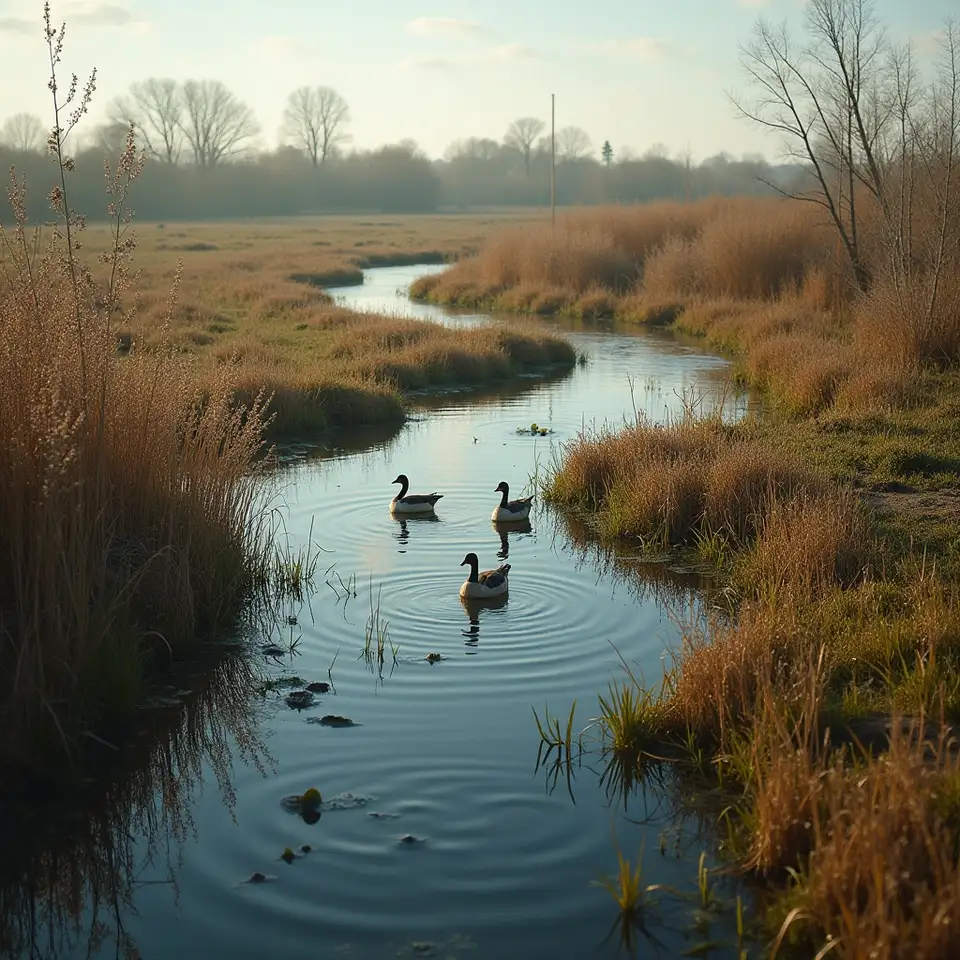
Wetlands are among the most ecologically productive habitat types in Canada, supporting disproportionately high levels of species richness relative to their area. Prairie potholes across the prairies and interior wetlands across British Columbia and Ontario are under significant development pressure, creating a strong additionality case for conservation-based credits. Verification of wetland habitat condition is well-supported by established scoring frameworks, making these credits among the more analytically tractable in the Canadian market. Permanence commitments for wetland sites must account for hydrological dynamics that can shift significantly over multi-decade timeframes, adding a layer of ecological complexity to the durability assessment.

Boreal Forest and Old-Growth Remnants
Canada's boreal forest represents one of the largest intact forest ecosystems remaining on Earth, but old-growth remnants — the structurally complex, multi-layered stands that support the highest levels of biodiversity — are under persistent pressure from resource extraction. Credits generated through protection of old-growth remnants carry strong additionality arguments in jurisdictions where logging rights remain active. The verification of forest habitat condition involves detailed structural assessments of canopy height, deadwood volume, and understorey diversity, all of which are well-supported by Canadian ecological science. The long ecological timelines involved make permanence provisions particularly critical for this habitat type.

Native Grasslands and Prairie Remnants
Canada has lost a substantial proportion of its native grassland ecosystems to agricultural conversion, making remnant native prairie among the most threatened habitat types in the country. This scarcity creates a compelling additionality case for grassland protection credits, particularly in Saskatchewan, Alberta, and Manitoba. Grassland habitat condition scoring measures plant community composition, invasive species pressure, and the presence of indicator bird and invertebrate species. The verification complexity is moderate, and permanence provisions for grassland sites must account for the ongoing management requirements — grazing regimes, invasive species control — that maintain habitat condition over the long term.
Key Risks
Regulatory Risk
The biodiversity credit market in Canada is shaped by regulatory frameworks that are still maturing at both federal and provincial levels. Changes to offset requirements, habitat classification systems, or verification standards can affect which credits are recognised and under what conditions. Participants engaging with this market across a multi-year horizon should monitor regulatory developments closely and avoid treating current frameworks as permanently settled. Orgulcoernuilyar tracks these changes as a core part of its analytical work, but past regulatory trajectories do not guarantee future policy directions. Results may vary significantly depending on how frameworks evolve.
Verification Risk
Not all credits presented to the market meet the verification standards required for genuine ecological integrity. Weaknesses in additionality arguments, insufficient audit rigour, short-duration permanence commitments, or inadequate leakage buffers can all undermine a credit's credibility under regulatory scrutiny or third-party challenge. The absence of a transparent registry record is a significant red flag. Orgulcoernuilyar's analytical framework applies a consistent set of integrity filters to credit assessment, but this analytical work does not constitute professional advice, and independent expert review is always advisable before any decision is made.

Market Liquidity Risk
Biodiversity net-gain credits are an emerging asset category, and the secondary market for them in Canada is not yet mature. Liquidity conditions — the ease with which a credit position can be adjusted or exited — may be significantly more constrained than in more established environmental markets. The three-to-five year strategic horizon that Orgulcoernuilyar's analytical work is designed to serve reflects this liquidity reality. Participants should approach this market with an understanding that it rewards patient, informed engagement rather than short-cycle decision-making. Past performance of analogous instruments does not guarantee future results, and results may vary.

Understanding the risks associated with biodiversity net-gain credits is as
important as understanding the ecological and regulatory frameworks that
generate them. Orgulcoernuilyar's analytical work aims to present this space with
honesty and nuance, without shortcuts or oversimplification. Past performance
does not guarantee future results, and independent professional advice is always
recommended before any decision is made.
Orgulcoernuilyar's analytical coverage of the Canadian biodiversity credit market is organised around a set of interconnected themes that reflect the ecological, regulatory, and verification dimensions of this emerging asset category. Each theme is tracked continuously, because the market is evolving and the frameworks that govern it are not static. The following areas represent the core of Orgulcoernuilyar's ongoing analytical attention across a multi-year horizon.
Federal and Provincial Regulatory Developments
Orgulcoernuilyar monitors changes to Canada's federal environmental offset requirements under the Species at Risk Act and the proposed Nature Accountability Act, as well as provincial offset frameworks in British Columbia, Ontario, Alberta, and beyond. Understanding where each jurisdiction sits in the maturation of its offset framework is foundational to understanding where structured demand for credits is building most strongly.
Habitat Condition Scoring Methodologies
The peer-reviewed frameworks used to score habitat condition determine the granularity and defensibility of the credits they generate. Orgulcoernuilyar tracks developments in Canadian ecological assessment methodology, including updates to scoring frameworks endorsed by Environment and Climate Change Canada, to understand how changes in measurement standards affect the integrity of credits already registered and those in the verification pipeline.
Verification and Audit Standards
The credibility of any credit depends on the rigour of the independent audit behind it. Orgulcoernuilyar follows the evolving standards applied by third-party verifiers operating in the Canadian market, noting where audit requirements are tightening, where new verification bodies are entering the space, and where gaps in oversight remain that could affect the long-term defensibility of credits issued under current standards.
Registry Infrastructure and Transparency
Publicly accessible, tamper-resistant credit registries are a minimum standard of market credibility. Orgulcoernuilyar tracks the development and adoption of registry platforms in Canada, assessing their transparency, the completeness of their issuance and retirement records, and the degree to which they support the provenance tracing that analytically serious participants require before engaging with any credit.
Supply-Side Landowner Dynamics
The supply of high-integrity credits depends on landowners willing to enter into long-duration conservation agreements. Orgulcoernuilyar follows the evolving engagement of Indigenous communities, agricultural operators, and conservation land trusts with credit generation opportunities across Canadian ecological zones, tracking where supply is building and where verification bottlenecks are constraining the pipeline of recognised credits.
Demand Signals and Offset Obligations
Demand for biodiversity credits is ultimately a function of regulatory obligation. Orgulcoernuilyar tracks which development sectors — infrastructure, resource extraction, real estate — face the strongest offset requirements under current and anticipated Canadian environmental law, and how those obligations are translating into structured demand for verified credits across different ecological regions and habitat types.